For years the advice was the same: get more experience, then start. But AI, QuickBooks Online and global remote work have shrunk the knowledge gap. The real barrier for young accountants today isn’t what they know — it’s how they position what they know. You can start a bookkeeping business without years of experience — what you need is the right positioning.
For years, young accountants were told the same thing:
“You need more experience.”
“You’re not ready yet.”
“First work under someone senior for five or ten years.”
“Clients won’t trust you until you’ve been doing this a long time.”
And in the past, that was partly true. If you were a junior, your access to real knowledge was limited. You waited for senior accountants to explain the work. You waited until someone trusted you with a real client. You waited until you were “allowed” to see how bookkeeping, reporting, payroll, reconciliations and client communication actually worked in practice.
That created a huge barrier. Not because young accountants weren’t capable — but because the knowledge was protected.
Today that barrier is much smaller. With AI tools, QuickBooks Online training, online communities, real examples and access to global bookkeeping workflows, young accountants can learn faster than ever before.
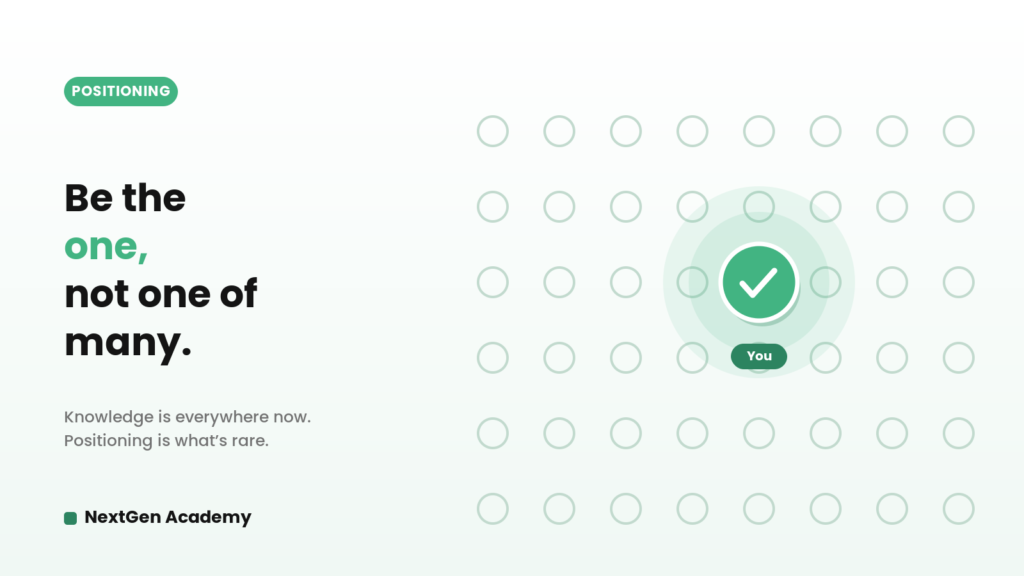
The real barrier is no longer knowledge. The real barrier is positioning.
Clients don’t buy “years of experience”
Many accountants believe that before they can start a bookkeeping business or work with U.S. clients, they need to know everything — every standard, every tax rule, every scenario. But that’s not how clients buy.
A small business owner doesn’t wake up thinking “I need someone with exactly ten years of experience.” They think something much more concrete:
“My books are messy.” “I don’t understand my numbers.” “My CPA keeps asking for documents.” “I don’t know if my business is profitable.” “I need someone reliable who can organize this every month.”
Clients buy outcomes. They buy:
- Reliability — someone who shows up every month.
- Clarity — numbers they can finally understand.
- Responsiveness — answers when they ask.
- Trust — the feeling that someone competent has their books.
This is especially true for small-business bookkeeping, remote bookkeeping and monthly support for U.S. businesses. A client doesn’t need you to know everything. They need you to know the right problem, offer the right service, and communicate clearly.
AI has changed the learning curve
AI doesn’t make experience irrelevant. Real client work still matters. Judgment, accuracy and responsibility still matter. But AI has changed how quickly a young accountant can build practical understanding and confidence.
A junior accountant today can use AI to:
- Understand bookkeeping workflows and clean up messy books.
- Walk through real-life client scenarios before they happen.
- Review QuickBooks Online processes and financial reports.
- Prepare better client questions and clearer explanations.
- Build checklists and SOPs, and study common small-business mistakes.
The learning curve is shorter. In the past, you had to wait years to see enough real examples. Today you can study them, test your understanding and prepare for client situations much earlier. That doesn’t mean pretending to be a senior expert — it means you can start with a focused service and grow from there.
You don’t need experience to start a bookkeeping business
One of the biggest mistakes young accountants make is thinking they have to offer everything from day one — bookkeeping, accounting, payroll, tax, CFO services, advisory, forecasting, cleanup, reporting. Everything.
That’s a mistake. If you’re starting, your goal isn’t to become a full accounting department overnight. Your goal is to solve one clear problem for one clear type of client.
Weak: “I offer all accounting services.”
Strong: “I help small U.S. service businesses keep their QuickBooks Online clean and updated every month.”
The second is stronger because it’s clear. The client understands what you do. You understand what you’re responsible for. And you can build your skill around one specific service. That’s positioning — and positioning isn’t just marketing. It’s choosing where you compete. It answers three questions:
- Who do you help?
- What problem do you solve?
- Why should they trust you?
Answer those clearly and you no longer compete only on experience. You compete on clarity.
The right positioning makes you easier to trust
A young accountant with weak positioning sounds like this: “I can do accounting, bookkeeping, payroll, finance, reporting, tax support — anything you need.” It sounds broad, risky, like someone trying to do everything. It creates doubt.
A young accountant with stronger positioning sounds like this:
“I help small U.S. businesses keep their QuickBooks Online organized — monthly bookkeeping, bank reconciliations and clean reports for their CPA.”
That’s more trustworthy. Not because the person claims to know everything, but because the service is specific and the problem is clear. You don’t need to be the most experienced person in the market. You need to be the right person for a specific problem.
Young accountants have an advantage right now
Many young accountants see their lack of experience as a weakness. But in today’s market they also have real advantages:
- They’re more comfortable with technology and faster to adopt AI tools.
- They’re more open to remote work and modern, cloud-first accounting.
- They learn QuickBooks Online and automation tools quickly.
- They’re more flexible in how they communicate with clients.
- They’re not tied to old ways of working.
This matters, because the industry is changing. Small businesses want faster communication, cleaner reports and more proactive support. They don’t just want someone who enters transactions — they want someone who helps them understand what’s happening in their business. That’s a big opening for accountants willing to learn, position themselves well, and build a modern service.
Experience still matters — but it isn’t the starting line
None of this means experience doesn’t count. It counts a lot. The more clients you work with, the better your judgment. The more messy books you see, the faster you spot problems. The more reports you prepare, the better you understand what owners need.
But experience shouldn’t be the excuse that stops you from ever starting. You don’t need ten years before you begin building an international career. You need a safe starting point:
- The basics of U.S. bookkeeping, and how QuickBooks Online is used by small businesses.
- The difference between bookkeeping, accounting, tax and advisory.
- One service you can deliver responsibly, with a clear process.
- Honest communication with clients.
That’s how you start — not by pretending to know everything, but by choosing a focused service and delivering it well.
What to focus on first as a new US bookkeeper
If you’re a young accountant who wants to work with U.S. clients, don’t begin by trying to learn everything. Start with the foundation: how U.S. bookkeeping works — bank feeds, reconciliations, chart of accounts, accounts receivable and payable, monthly reports — and how to communicate clearly about all of it.
Then choose one clear service to lead with:
- Monthly bookkeeping for service businesses.
- QuickBooks Online cleanup support.
- Bank reconciliation support.
- Monthly reporting for small businesses.
- Bookkeeping support for U.S. accounting firms.
These are realistic starting points. They let you build experience while delivering real value from day one.
Want the foundation, not just the theory?
NextGen Academy teaches U.S. bookkeeping, QuickBooks Online and how to position yourself for international clients — from people doing it every day.
The future belongs to accountants who can position themselves
AI is making knowledge more accessible. Online tools are making remote work more possible. U.S. small businesses still need reliable bookkeeping, and many firms need trained bookkeepers who understand modern workflows. That’s a real opportunity for accountants outside the U.S.
But the ones who win won’t be the ones who simply say “I know accounting.” They’ll be the ones who can say: I understand this client. I understand this problem. I know the service I provide. I know where I can help. I know how to communicate the value clearly.
That’s positioning. And for young accountants, it may be the most important skill to learn after bookkeeping itself.
Frequently asked questions
Can you start a bookkeeping business with no experience?
Yes. You don’t need ten years before you start. With QuickBooks Online, AI tools and real workflow training you can learn the fundamentals quickly and lead with one focused service — like monthly bookkeeping or cleanups — then grow as you take on clients.
Do you need a degree or certification to do bookkeeping for US clients?
No US degree is required to do bookkeeping — it’s different from being a licensed CPA. US small businesses want reliable monthly books, clean reports and clear communication. A QuickBooks Online skill set and one focused service matter far more than a specific certificate.
How do non-US accountants get their first US client?
Pick one clear service and one clear client type, then position yourself around the problem you solve: keeping small US service businesses’ QuickBooks Online clean every month. Clarity builds trust faster than a long resume and makes outreach far easier.
Is QuickBooks Online hard to learn?
No. QuickBooks Online is built for small businesses, and the core tasks — bank feeds, reconciliations, chart of accounts and monthly reports — follow repeatable patterns. With structured training and real examples most accountants learn the essentials in weeks, not years.
How long does it take to start working with US clients?
Months, not years. Once you understand US bookkeeping basics and can deliver one service responsibly, you’re ready to position yourself and start reaching out. Experience then compounds with every client you take on.
Final thought
Senior accountants used to control access to practical knowledge. Today that gate is opening. AI, online education, QuickBooks Online training and global remote work have changed the path.
You still need to learn. You still need to practice. You still need to be responsible. But you don’t need to wait ten years before you start building your future. You need to understand the right problem, choose the right client, offer the right service, and position yourself clearly.
Because the barrier isn’t knowledge anymore. The barrier is positioning.